
How to Prioritize Your Home Renovation: What to Tackle First and Why
Over the past two weeks we have covered two of the most practical questions a homeowner can ask before starting a renovation. First — what does it actually cost? Then — how do people actually pay for it?
This week we are tackling the third question that almost always follows: you know what it costs, you know how you can fund it, but your wish list is longer than your current budget. So what do you do first?
For homeowners across Fuquay-Varina, Holly Springs, Angier, Lillington, Garner, and Willow Spring who are sitting with a renovation vision that spans multiple rooms and multiple years — this blog is designed to help you think through that list intelligently. Not every renovation project carries the same weight. Some are urgent. Some are high-return. Some are purely aspirational. And some are the kind of thing that gets much more expensive the longer you wait.
Here is how to prioritize your home renovation — and how to build a phased plan that makes the most of every dollar you invest across Wake, Harnett, and Johnston Counties.
Start With the Problems You Can’t Afford to Ignore
Before you think about what you want, think about what your home needs. There is a category of renovation work that is not aspirational — it is protective. And projects in this category should almost always come first regardless of what else is on the list.
Moisture and structural issues. A crawl space with active moisture infiltration, wood rot in the floor system, a foundation concern, or a roof that is past its service life — these are problems that compound over time. Every month they go unaddressed they get more expensive to fix. A crawl space repair/upgrade starting at $10,000 today can prevent structural wood damage that costs multiples of that to remediate later. If your home has any known moisture, structural, or envelope issues, these come first. Full stop.
Electrical and plumbing deficiencies. Outdated electrical panels, aluminum wiring in older homes, galvanized plumbing that is corroding from the inside, or active plumbing leaks that are causing hidden water damage — these are safety and liability issues that take priority over cosmetic renovation regardless of how eager you are to start on the kitchen.
HVAC systems at end of life. A heating and cooling system that is failing is not a deferrable problem in North Carolina’s climate. Replacing an HVAC system is not glamorous but it is foundational — and doing it before you renovate the spaces it serves means you are not disrupting newly finished work to access mechanical systems later.
The principle here is straightforward: spend money protecting what you have before you spend money improving it. A beautiful new kitchen in a home with an unaddressed crawl space moisture problem is a beautiful new kitchen sitting on a deteriorating foundation.
Then Address the Projects That Protect Your Investment
Once the urgent protective work is addressed, the next tier of renovation priority is work that protects and strengthens the value of the investment you have already made in your home.
Exterior envelope work. Roofing, siding, windows, and doors that are failing are not just cosmetic issues — they are allowing moisture, air infiltration, and energy loss that affects every room inside the house. Homeowners across Wake County and Harnett County who are planning interior renovations should assess the condition of their exterior envelope first. It makes no sense to renovate a primary bathroom in a home where a failing roof is allowing moisture infiltration into the structure above it.
Kitchen and bathroom renovations in homes being prepared for sale. According to the 2025 Cost vs. Value Report for the Raleigh market, a midrange minor kitchen remodel recouped approximately 95.5% of its cost at resale — one of the strongest returns of any renovation category. If you are planning to sell your home in the next three to five years, kitchen and bathroom updates are among the highest-return investments you can make in terms of resale value and buyer appeal.
Deferred maintenance that is becoming a larger problem. Hairline cracks that are growing. Water stains that reappear after painting over them. A deck that is softening underfoot. These are signals that something more significant is developing — and addressing them at the minor stage almost always costs significantly less than addressing them after they have progressed.
Then Invest in the Projects That Improve Daily Life
With protective and investment-protective work addressed, the renovation projects that most meaningfully improve daily quality of life deserve priority over purely aspirational additions.
Kitchen renovations for homes where the kitchen is genuinely dysfunctional. If your family’s daily experience in your home is meaningfully affected by a kitchen that doesn’t work — inadequate storage, a layout that creates constant friction, appliances that are unreliable, countertop space that is never enough — a kitchen renovation is not a luxury. It is a daily quality-of-life improvement that you and your family benefit from every single day.
This is where the McLeod Kitchen Refresh becomes a particularly smart priority decision for homeowners across the Fuquay-Varina area. If the layout works but the kitchen looks and feels dated, a Refresh starting at $35,000 delivers a transformation that improves daily life significantly without the cost and timeline of a full gut renovation. You get the daily benefit immediately and preserve budget for the next project on the list.
Primary bathroom renovations. The primary bathroom is the space that starts and ends every day for the people who live in the home. A bathroom that functions poorly — inadequate storage, a shower that doesn’t work well, a vanity layout that creates friction in the morning — affects daily life in a way that is easy to underestimate when you are used to living with it. Primary bathroom renovations, starting at $25,000 for a Refresh and $40,000 for a full renovation, consistently rank among the highest daily-quality-of-life improvements homeowners describe after their project is complete.
Outdoor living spaces for homes where they are genuinely used. A deck or screened porch starting at $20,000 can meaningfully expand the usable living space of a home and change how a family uses their property for most of the year. In North Carolina’s climate, well-designed outdoor living spaces are used extensively from early spring through late fall — and the daily enjoyment they deliver is real and consistent.
Then Plan the Aspirational Projects
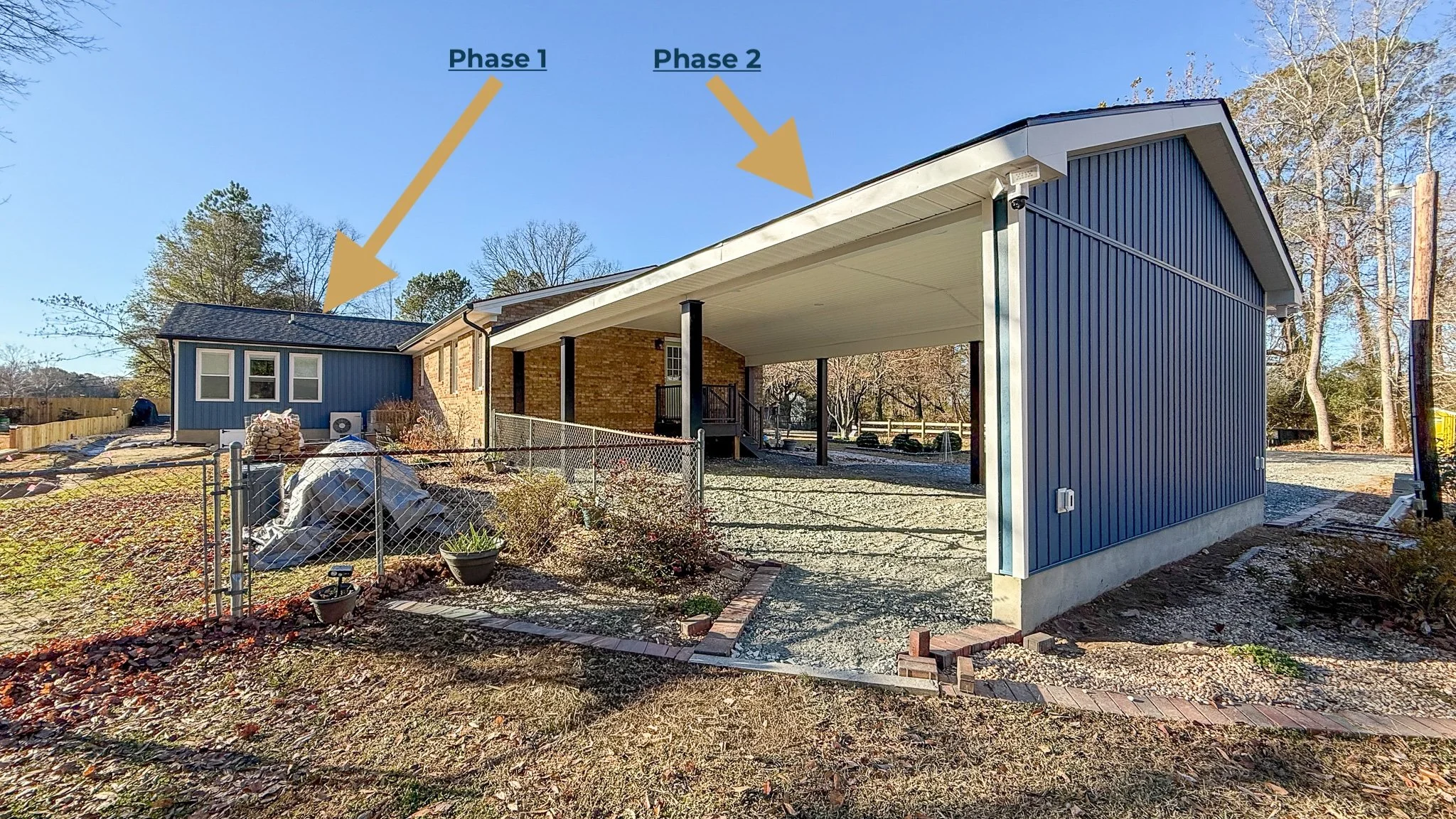
At the end of the priority list — not because they are unimportant, but because they are best planned and executed after the foundational and daily-life work is addressed — are the aspirational projects. Home additions that expand the footprint. Attic build-outs that create new living space. Primary suite additions that add a bathroom where one doesn’t currently exist. Whole-home renovations that address multiple spaces in a coordinated way.
These projects are often the most exciting — and the most expensive. They deserve careful planning, realistic budgeting, and the right financing strategy in place before work begins. They also benefit most from being planned with a licensed general contractor who can assess the structural possibilities, coordinate engineering where required, and sequence the work correctly so that aspirational additions integrate seamlessly with the existing home rather than feeling like afterthoughts.
If a home addition, attic build-out, or primary suite addition is on your list, starting the conversation with McLeod Contracting Group now — even if construction is twelve to eighteen months away — is the right move. The pre-construction and design phase for larger projects takes time, and homeowners who start the planning conversation early end up with better-designed, better-executed projects than those who try to compress everything into a shorter window.
How to Build a Phased Renovation Plan
For homeowners across Fuquay-Varina, Holly Springs, and the surrounding areas of Wake, Harnett, and Johnston Counties whose renovation vision spans multiple projects over multiple years, here is a practical framework for building a phased plan that makes financial and strategic sense.
Year one: protective and foundational work. Address any moisture, structural, mechanical, or envelope issues first. These are the projects that protect everything else. If your crawl space needs encapsulation, your roof is past its service life, or your electrical panel is undersized for the home’s current demands — year one is for solving those problems.
Year two: daily-life improvements. With the home’s foundational systems addressed, invest in the renovation that most improves your daily experience. For most families across our service area that is the kitchen, the primary bathroom, or both. Use the home’s appreciating value and the equity built in year one’s improvements to access renovation financing — whether through our HFS Financial partnership, a HELOC, or a home equity loan — at favorable terms.
Year three and beyond: aspirational additions. With protective and daily-life work complete, the aspirational projects on your list — additions, attic build-outs, outdoor living — can be planned and executed on a timeline that allows for proper design, permitting, and construction management without rushing decisions that deserve careful thought.
This framework is not rigid — every homeowner’s situation is different and the right sequence for your home depends on its specific condition, your specific goals, and your specific financial picture. What we offer at McLeod Contracting Group is the honest guidance to help you figure out what that sequence looks like for your home — starting with the first conversation.
The Most Important Thing You Can Do Right Now
If you have been reading this three-part series — the cost guide, the financing guide, and this prioritization guide — and you are feeling more prepared than you were three weeks ago, that is exactly the point. An informed homeowner makes better decisions, has better contractor conversations, and ends up with better renovation outcomes than one who starts the process without this foundation.
The most important thing you can do right now is start the conversation. Not a commitment. Not a contract. Just a conversation with a licensed, insured general contractor who will walk your home, tell you honestly what they see, give you a realistic ballpark range for the projects you are thinking about, and help you understand what the right sequence looks like for your specific situation.
That is what our discovery call and initial site visit are designed to do — and we do it at no cost and no obligation for homeowners across Fuquay-Varina, Holly Springs, Angier, Lillington, Garner, Willow Spring, and the surrounding areas of Wake, Harnett, and Johnston Counties.
